

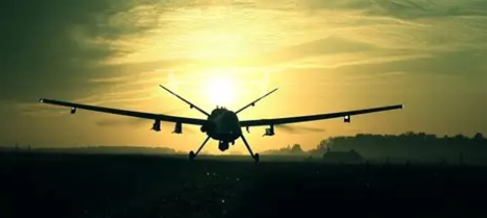
The first AI-assisted drones used in warfare began in the early 2000s, primarily in counterterrorism and surveillance roles. AI was used to give drones the ability to interpret sensor data, navigate without GPS, coordinate with other drones, and respond to changing conditions faster than a human operator could.
But the story is much deeper, and the technology is far more intricate than that. A good glimpse was as we follow the Russia/Ukraine war. But “Operation Epic Fury” is giving a clearer picture as to how drones will change war fighting forever.
WHAT MAKES A DRONE “AI-POWERED”
AI changes drones in three core ways:
Perception — They interpret camera, radar, and LiDAR (Light Detection and Ranging) data to recognize terrain, vehicles, people, and obstacles. This allows navigation even when GPS or radio links are disrupted. Small quadcopters in Ukraine demonstrated this by completing missions after GPS jamming, relying on onboard vision models to keep flying.
Decision‑making — They choose routes, avoid threats, and adjust missions based on changing conditions. U.S. tests of AI‑guided battlefield drones showed they could perform reconnaissance and combat assistance with minimal operator input.
Coordination — AI lets multiple drones share information and act as a team. Scout AI’s Fury platform demonstrated a swarm responding to a simple verbal instruction and autonomously executing a coordinated attack.
HOW MILITARIES ARE USING AI-ENABLED DRONES TODAY
Autonomous wingmen
The U.S. Air Force is testing AI‑piloted drones like the XQ‑58 that fly alongside human pilots. These drones maneuver independently, react faster than humans, and can take on high‑risk tasks. Pilots describe the experience as flying with a partner that “rolls and moves more aggressively than a human would.”
GPS‑independent navigation
AI navigation packages allow drones to operate in contested environments where GPS and communications are jammed. This is now a standard requirement in modern conflicts, and programs like DARPA’s EVADE are building autonomy that continues missions even when cut off from operators.
Algorithm‑driven targeting support
AI is increasingly used to process intelligence and accelerate planning. During recent operations in Iran, AI systems helped analyze data and shrink the time between identifying a target and acting on it.
WHERE IS THE TECHNOLOGY HEADED NEXT
Human‑machine teams, where pilots or commanders supervise groups of autonomous drones.
Adaptive swarms, capable of reorganizing themselves if drones are lost.
Integrated sensing, combining data from drones, satellites, and ground systems into a single AI‑driven picture of the battlefield.
HOW AI‑POWERED MILITARY DRONES THINK IN FLIGHT
AI‑enabled military drones operate by running a continuous loop of perception, prediction, and decision-making entirely onboard. This loop allows them to navigate, avoid threats, and complete missions even when GPS or communications are jammed.
PERCEPTION: HOW DRONES UNDERSTAND THEIR SURROUNDINGS
Modern drones use cameras, LiDAR, radar, and infrared sensors to build a live model of the world around them. Neural networks process this data in milliseconds to identify terrain, vehicles, obstacles, people, and threat signatures. This allows drones to “see” even when external navigation aids are unavailable.
PREDICTION: HOW DRONES ANTICIPATE WHAT WILL HAPPEN NEXT
After interpreting their surroundings, drones use predictive models to forecast the movement of objects, potential collision paths, environmental changes like wind, and likely maneuvers of enemy vehicles or aircraft. This predictive capability allows drones to fly through forests, urban environments, or contested airspace at high speed.
DECISION-MAKING: HOW DRONES CHOOSE ACTIONS IN REAL TIME
The decision layer uses reinforcement-learning models and rule-based logic to select the best action based on mission goals, threat level, terrain, battery status, and operator intent (if communication is available). This enables drones to choose alternate routes, evade threats, maintain formation with manned aircraft, and continue missions even when cut off from human control.
THE COGNITIVE LOOP
A military drone’s onboard intelligence runs a rapid cycle:
Perceive → Predict → Decide → Act → Repeat.
This loop runs many times per second. It is what makes AI-powered drones fundamentally different from remote-controlled aircraft. They do not wait for instructions; they interpret intent and act on it.
A REAL EXAMPLE OF AUTONOMY
In recent conflicts, small drones that lost GPS and radio links due to jamming switched into full autonomy. Their vision systems mapped the terrain, predictive models estimated safe paths, and decision engines selected routes to complete the mission. They continued flying without human input.
WHAT COMES NEXT
Future developments include drones with multiple AI “brains” that vote on decisions, adaptive swarms that reorganize themselves if drones are lost, semantic perception that understands context (such as identifying cover or hostile vehicles), and human–machine teams where pilots supervise multiple autonomous drones.